

How the Government of India Regulates Export Import Business: A Beginner’s Guide
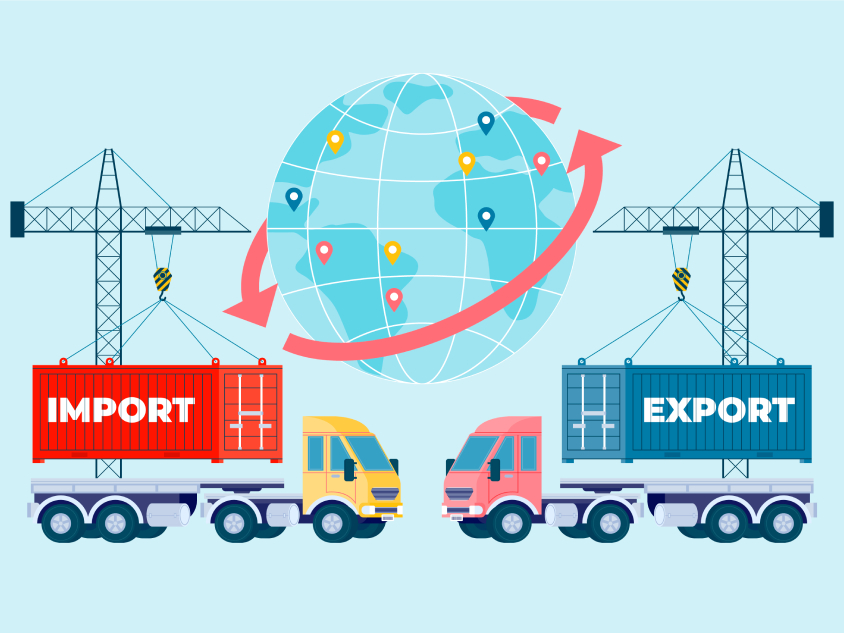
If you’re new to the world of international trade, you might be wondering how the Export and Import by Government of India is controlled and regulated. The process may seem complex at first—but with the right guidance, understanding how the Indian trade regulations work becomes manageable. Whether you're looking to start your own business or expand into global markets, having a clear understanding of how EXIM India operates is essential.
In this beginner’s guide, we’ll walk you through the key aspects of how the Government of India regulates export-import business, highlight important policies, and provide tips for aspiring entrepreneurs.
What Is Export-Import Regulation?
At its core, export-import regulation involves a set of laws, guidelines, and documentation processes laid out by the Indian government to control and monitor international trade. These rules help protect domestic industries, ensure economic stability, and maintain compliance with international agreements.
Who Governs Export Import in India?
The Directorate General of Foreign Trade (DGFT) under the Ministry of Commerce and Industry is the apex body responsible for the formulation and implementation of India’s foreign trade policy.
This body works in coordination with:
- Customs Departments
- Reserve Bank of India (RBI)
- Ministry of Finance
- Export Promotion Councils (EPCs)
Together, they ensure that every export or import transaction complies with national interests and international norms.
Key Elements of India’s Export Import Policy
1. Foreign Trade Policy (FTP)
The Foreign Trade Policy, formerly known as EXIM Policy, is a comprehensive framework designed to boost India’s exports and regulate imports efficiently.
- Updated every 5 years
- Provides duty exemptions, export incentives, and compliance procedures
- Aims to make India a major player in global trade
2. Import Export Code (IEC)
An IEC is mandatory for anyone who wants to start an export-import business in India. It’s a unique 10-digit number issued by the DGFT.
Without this code, you cannot legally ship goods out of or into India.
3. Harmonized System of Nomenclature (HSN) Codes
These are universal codes used to classify traded products. Each product has its specific HSN code, used in shipping, documentation, and taxation.
4. Export Promotion Schemes
The Government offers several schemes such as:
- MEIS (Merchandise Exports from India Scheme)
- SEIS (Services Exports from India Scheme)
- Advance Authorization Scheme
- Export Oriented Units (EOUs)
These are designed to promote exports through financial benefits, duty reductions, and infrastructure support.
Role of Customs and Duties
When exporting or importing, businesses must pay certain customs duties, which are regulated under the Customs Act, 1962. Duties are categorized as:
- Basic Customs Duty (BCD)
- Countervailing Duty (CVD)
- Safeguard Duty
Rates vary depending on the product type, country of origin, and trade agreements.
Important Compliance Measures for EXIM India
✅ Accurate Documentation
- Commercial Invoice
- Bill of Lading
- Packing List
- Certificate of Origin
- Shipping Bills
✅ Quality Certifications
For some categories like food, electronics, or pharmaceuticals, exporters/importers must obtain certifications from bodies like FSSAI, BIS, etc.
✅ EDI (Electronic Data Interchange) Filing
The Indian Customs EDI System facilitates faster processing through digital submissions, reducing delays and paperwork.
Step-by-Step Process to Start an Export-Import Business in India
- Register your business (as sole proprietorship, partnership, LLP or company)
- Apply for IEC from DGFT
- Select your product and target market
- Ensure product compliance (labelling, quality, certifications)
- Identify buyers/suppliers internationally
- Understand export-import duties, freight and insurance costs
- Use Export Promotion Councils for support and guidance
Why Understanding Indian Trade Regulations is Crucial
If you're entering this industry without knowing the rules, you're navigating without a map. Non-compliance can lead to:
- Fines and penalties
- Product seizures
- Business shutdowns
By learning how the Government of India regulates exports and imports, you protect your business and grow confidently.
Resources for Learning More
One of the best ways to start is by joining a trusted training institute. ETTI (Export Trade & Training Institute) offers professional courses in export-import management, customs procedures, and international logistics, making it an ideal platform for beginners and working professionals alike.
Conclusion
India’s export-import landscape is rich with opportunity—but it requires the right knowledge, compliance, and strategic vision. Understanding how the export-import by Government of India is structured not only helps avoid legal pitfalls but also prepares businesses to thrive in global markets.
Whether you're a budding entrepreneur or an established business looking to go global, understanding the export import policy, following Indian trade regulations, and staying updated with EXIM India developments is your roadmap to success.
✅ Ready to Take the First Step in International Trade?
Explore professional export-import training at ETTI and empower your future in global business.
FAQs
- What is EXIM India?
EXIM India refers to the overall system governing export and import in India, involving policies, practices, regulations, and players involved in cross-border trade. - Is IEC required for every business in India?
Yes, an Import Export Code (IEC) is mandatory for any entity involved in the import or export of goods or services. - How can I learn more about foreign trade policies in India?
You can access the official DGFT website or join training institutes like ETTI for professional courses on foreign trade and export-import management. - What are some major government schemes for exporters?
Schemes like MEIS, SEIS, Advance License, and EOUs offer benefits such as duty exemptions, tax credits, and export incentives. - Are there any restrictions on what can be exported or imported?
Yes, India has negative lists for exports and imports that restrict certain goods for safety, security, or economic reasons. Always check the latest DGFT notifications before shipping.


